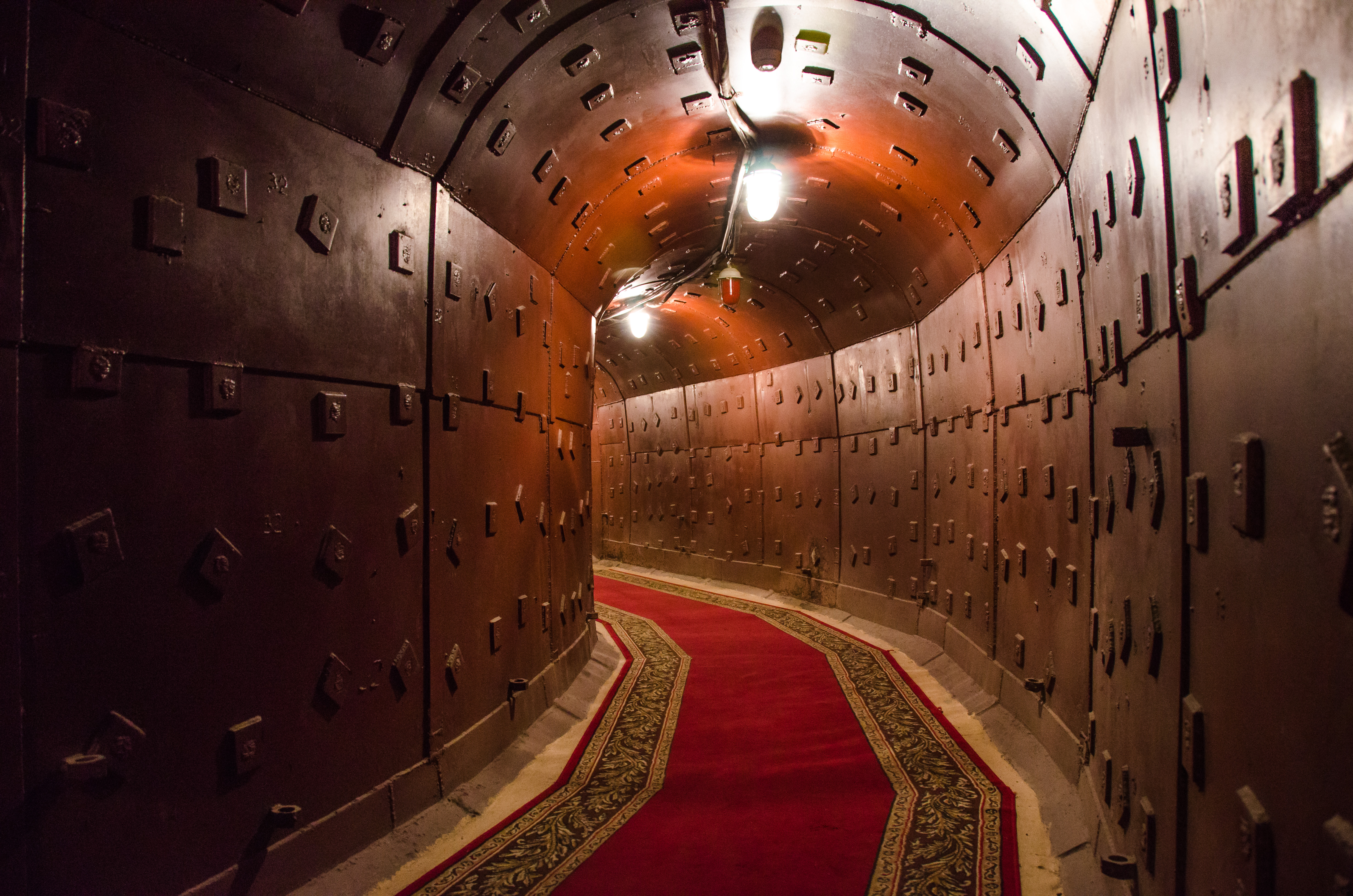
In 1950, SMU Mosmetrostroy began to work on the construction of a Bunker. The structure's design and depth of 65 meters were chosen based on the results of nuclear tests conducted in the Soviet Union in 1949. It was assumed that in the event of a nuclear attack, the facility would become a reliable place for top officials of the Soviet Union to work and would be completely protected from all the damaging factors of a nuclear explosion.
Already in the fall of 1947, the Metroproject Institute prepared a technical project for A "bunker on Taganka" under the code name "Object 02" (CHZ-293). The location of the building-the Tagansky hill area-was not chosen by chance, because the Bunker had to be located in the vicinity of the Moscow Kremlin, so that Stalin and the government could quickly get to it and manage the state and army in a nuclear war, as well as because of the density of the development of Tagansky hill.
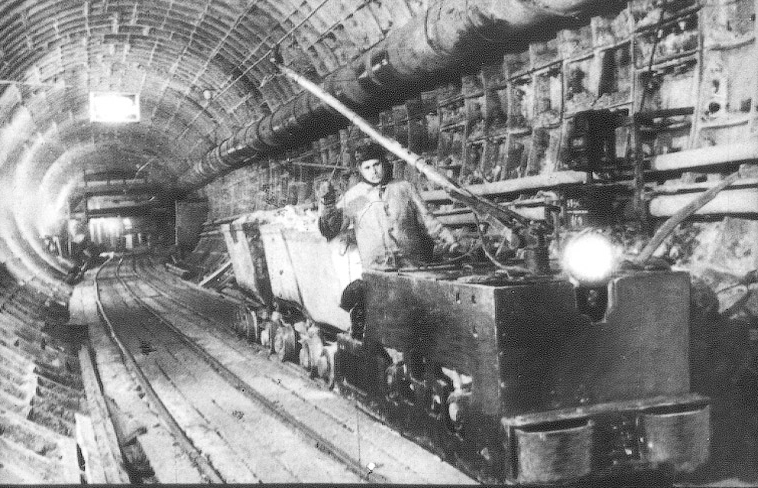
On the shoulders of the builders lay an impossible task-to build a huge structure in the center of Moscow, without damaging the city's communication systems, and most importantly - to keep the construction secret from the eyes of ordinary people and foreign intelligence services. The design was chosen based on the type of previously built bunkers. This project was submitted for consideration
state expert Commission, the head of which was appointed Lieutenant General of engineering troops Alexander Yakovlevich Kalyagin.
In 1952, the construction of the main structures of the bunker was completed. By the summer of 1953, life support systems were installed. From April 1954, the first military and civilian signalmen began working at the facility. Communications were laid and necessary equipment was installed.
Work on the creation of the bunker was carried out by the best specialists of the Metrostroy Department at a real Stalinist pace. The ground was raised through four construction shafts that were previously used in the construction of the metro.
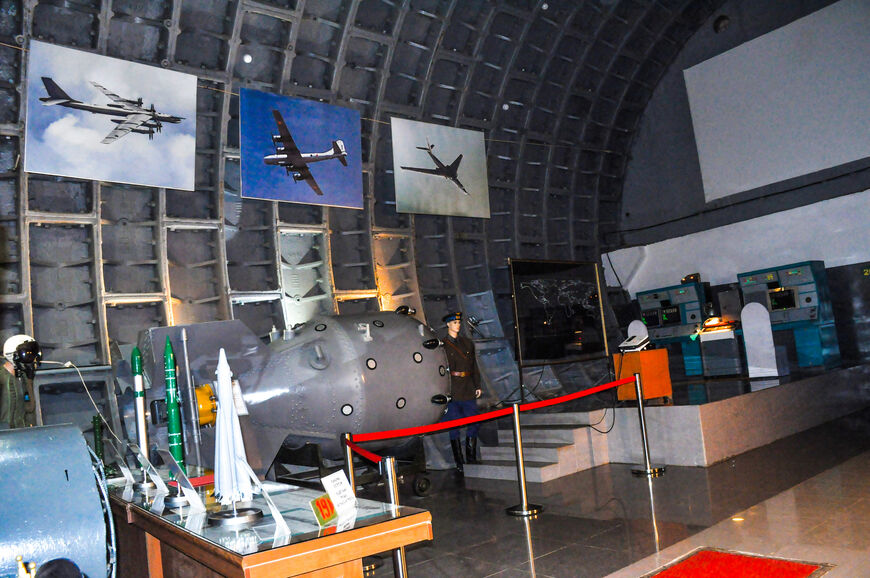
In 1955-56, the Bunker housed equipment and established communications with new regiments and divisions of strategic bombers throughout the country. The Ministry of Communications provided the transmission of government and military classified messages, communication with radio centers, both in the USSR and in the countries of the Warsaw Pact. More than 1,000 KV transmitters across the country were used for electronic warfare and transmitting messages to aircraft.
For three decades, until 1986, the bunker was used to command strategic bombers carrying nuclear weapons on Board. However, the Bunker created in the reality of the 50s could no longer resist the new high-precision weapons.
Such an important facility as the long-Range aviation control center should have been moved to a safer location. Just as the once mighty Kremlin, which was able to repel the invaders, has now become a historical monument, so our facility has opened its doors to guests. But to this day, spec. object "Bunker-42" has an equally important service. Every day, people descend to a depth of 65 meters to touch that distant era when the world was on the verge of nuclear war.